Now is the right time to become an American Federation of Musicians member. From ragtime to rap, from the early phonograph to today's digital recordings, the AFM has been there for its members. And now there are more benefits available to AFM members than ever before, including a multi-million dollar pension fund, excellent contract protection, instrument and travelers insurance, work referral programs and access to licensed booking agents to keep you working.

As an AFM member, you are part of a membership of more than 80,000 musicians. Experience has proven that collective activity on behalf of individuals with similar interests is the most effective way to achieve a goal. The AFM can negotiate agreements and administer contracts, procure valuable benefits and achieve legislative goals. A single musician has no such power.

The AFM has a proud history of managing change rather than being victimized by it. We find strength in adversity, and when the going gets tough, we get creative - all on your behalf.

Like the industry, the AFM is also changing and evolving, and its policies and programs will move in new directions dictated by its members. As a member, you will determine these directions through your interest and involvement. Your membership card will be your key to participation in governing your union, keeping it responsive to your needs and enabling it to serve you better. To become a member now, visit www.afm.org/join.

FIND OUT MORE ABOUT THE AFM


Home » Officer Columns » Executive Board Members » Durable Change Comes from Collective Effort Against Craft Erosion


Durable Change Comes from Collective Effort Against Craft Erosion

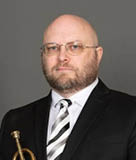
  -  AFM International Executive Board Member and President of Local 6 (San Francisco, CA)

When I first moved to San Francisco, the minimum number of musicians required for a traveling Pamphlet B Broadway show was 16. That number mattered. If a production didn’t need that many musicians, the company was still required to pay “walking checks” to make up the difference. In other words, if you benefited from the city’s theaters, audiences, and cultural infrastructure, you also bore responsibility for supporting its professional musicians.

That system wasn’t perfect, but it was honest. It acknowledged that live theater is a collaborative ecosystem. Unsurprisingly, producers and theater owners didn’t love paying musicians who weren’t playing. Rather than maintaining larger live orchestras, the industry chose a different path.

Producers fought those minimums at the bargaining table. They challenged them legally. They looked for loopholes and technicalities that would allow them to reduce local hiring while still calling their product “live theater.” And as new technologies emerged, they leaned into them aggressively. Virtual Orchestra, Ableton, KeyComp, and many others quickly replaced the need for live musicians.

Technology itself isn’t the villain. Musicians have always adapted to new tools. But what we’ve seen in touring Broadway productions is not innovation for artistic reasons; it’s substitution driven by cost avoidance.

Because of this, the sound of theater itself has changed. Live instruments are processed to resemble recordings—compressed, balanced, and smoothed until the hall no longer sounds like a room filled with musicians, but like a carefully mastered album played at scale. Audiences are being conditioned to accept a recorded sound as the norm, even in spaces dedicated to live performance.

The physical spaces in theaters have followed the same logic. Pits are lowered, enclosed, or displaced to limit acoustic bleed and increase control at the soundboard. The very thing that distinguishes live music becomes invisible as well as inaudible.

Changing corporate structures have exacerbated the problem. Today, it is common for a new production company to be incorporated for each touring show. Increasingly, the relationship between producer and venue is structured as a rental arrangement, allowing production companies to sidestep local collective bargaining agreements and the protections that once ensured meaningful employment.

The consequences extend beyond employment numbers. Young players lose exposure to high-level theater books. Mid-career musicians lose stable, union wages. Communities lose the connection between their local arts workforce and the shows that pass through their cities.

I want to be very clear that thinking about local theater musicians in no way suggests a conflict with touring theater musicians. That is a narrative designed to divide us and reduce our power. Touring and local musicians are not competing interests; they share the same problem. When you reduce the number of musicians from 16 to four, everyone loses.

As union leaders and theater musicians, we’re often told this is simply “the market.” But markets are shaped by choices, contracts, and values. The decline of live orchestras in our theaters is not inevitable; it’s the outcome of sustained pressure to redefine theater as something cheaper, smaller, and more easily automated.

Live musicians breathe with the stage. They respond to actors, acoustics, and the energy in the room. When we replace people with machines, we don’t just cut costs—we narrow the expressive range of the art form itself.

The task ahead is formidable. But history offers a clear lesson: durable change has never occurred because of a solitary voice. It comes from collective effort—musicians acting together, speaking together, and refusing to accept the quiet erosion of their craft. That communal resolve is not only our strongest tool; it is the very tradition on which theater itself was built.


NEWS


https://totoabadi25.com/ abadicash abadislot Menara368 royalbola abadislot abadislot menara368 abadicash menara368 totoabadi Menara368