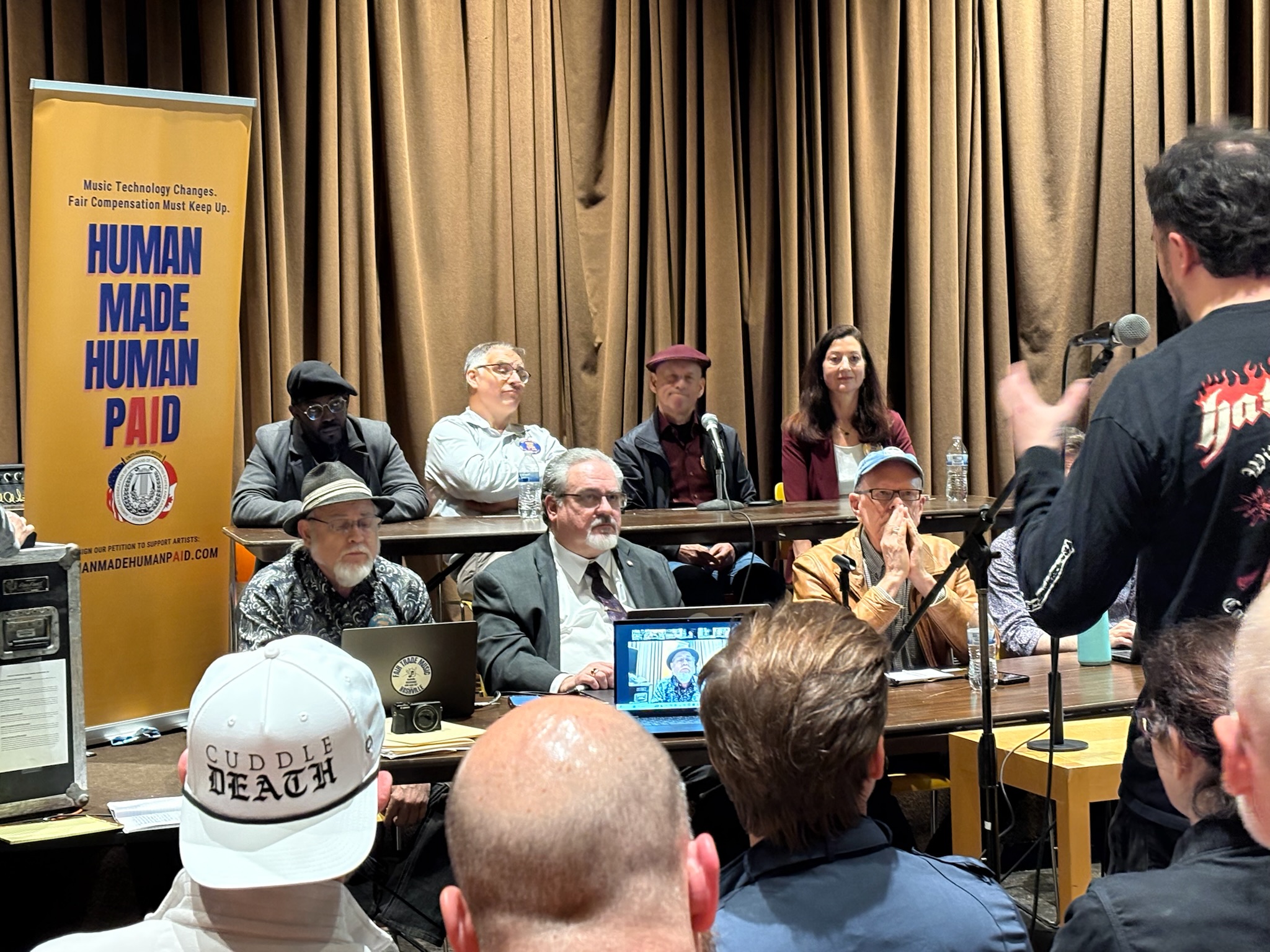
Now is the right time to become an American Federation of Musicians member. From ragtime to rap, from the early phonograph to today's digital recordings, the AFM has been there for its members. And now there are more benefits available to AFM members than ever before, including a multi-million dollar pension fund, excellent contract protection, instrument and travelers insurance, work referral programs and access to licensed booking agents to keep you working.

As an AFM member, you are part of a membership of more than 80,000 musicians. Experience has proven that collective activity on behalf of individuals with similar interests is the most effective way to achieve a goal. The AFM can negotiate agreements and administer contracts, procure valuable benefits and achieve legislative goals. A single musician has no such power.

The AFM has a proud history of managing change rather than being victimized by it. We find strength in adversity, and when the going gets tough, we get creative - all on your behalf.

Like the industry, the AFM is also changing and evolving, and its policies and programs will move in new directions dictated by its members. As a member, you will determine these directions through your interest and involvement. Your membership card will be your key to participation in governing your union, keeping it responsive to your needs and enabling it to serve you better. To become a member now, visit www.afm.org/join.

FIND OUT MORE ABOUT THE AFM


Home » Recent News » P-2 Visa Update: Delays and Uncertainty Continue


P-2 Visa Update: Delays and Uncertainty Continue

  -  AFM Canadian Office Executive Director

While to some it may feel as though accessing the US is only restrictive to Canadian musicians, these visa delays impact artists of all disciplines, athletes, students seeking work, and other foreign workers seeking entry to the US. Advocacy toward visa improvements and US entry for Canadian members is top of mind for our Federation officers, among them AFM President Tino Gagliardi, Vice President from Canada Allistair Elliott, and Secretary-Treasurer Ken Shirk, as well as AFM Government Relations Director Ben Kessler.

Visa petitioning has remained quite steady despite costs and delays. We have only seen a 26% decline in submissions since early 2025. This decline is a result of the vast delays in standard processing (fluctuating between six and 13 months), plus the increased cost of premium processing ($2,965 as of March 2026).

Current State of Visa Processing

At the time of this writing, US Citizenship and Immigration Services (USCIS) is quoting standard processing of 13 months. This only works for members applying for extensions who may remain in the US due to ongoing steady engagements. Even in these situations, the current processing time isn’t ideal. For members who do not qualify for extensions, 13 months is problematic because USCIS policy does not allow submissions more than 12 months in advance. Most members are not contracting more than one year in advance, so premium processing becomes mandatory. That said, we did see this same increase in processing time a few months ago, but then it dropped back down to 10 months, before creeping back up again.

Exacerbating the above, Premium Processing files have been fraught with delays due to files being returned for additional information. In most situations, these requests appear to be frivolous. We typically answer the requests with information that was already contained in the original submission. As a result of this new processing conundrum, we now recommend 60 days (up from 45) on premium processing requests. Thankfully, none of our petitions were denied a visa, but it is quite a hurdle to get the file through.

Tips to Ease Processing Pain

We always encourage members to make the most of the visa. Whenever possible, book as many US dates as you are able, so the money for the visa stretches further. P-2 visas can be approved for up to one year, provided regular ongoing work can be evidenced. Ongoing work can be as few as four to six engagements per year, depending upon how those gigs are spaced in the course of any 365-day period. (A one-year visa does not need to be for a strict calendar year; it can run April 1, 2027 to March 31, 2028, for example.)

Attending and showcasing at industry conferences, such as Folk Alliance International or South by Southwest can be counted toward ongoing professional activity. Many conferences do not require a visa to attend, but these can be helpful add-ins to visa applications to fill gaps for yearlong visa requests.

Members may not realize that writing and recording collaborations with US musicians also require a visa. Other activities to keep in mind to bridge gaps are rehearsals, meetings with US industry professionals (labels or agents), and radio or TV interviews, when they take place in the US. Please keep in mind that all professional activity must be officially documented as it will be confirmed by AFM staff and USCIS adjudicators.

Our website is always kept up to date, so please consult www.cfmusicians.afm.org/services/u-s-work-permits before submitting your P-2 visa application. Also, the P-2/Artist Immigration administrative team is always available to answer questions. They work diligently to make this process as easy as possible for members, despite the far from ideal procedural requirements at this time. You can reach the team by phone at 416-391-5161 (or toll-free at 800-463-6333), or by email: Noelle Nedrick (nnedrick@afm.org, ext. 1004), Melaine Jagmohan (mjagmohan@afm.org, ext. 1002), and Bilingual Administrator Grim Pham (gpham@afm.org, ext. 1007).


NEWS


https://totoabadi25.com/ abadicash abadislot Menara368 royalbola abadislot abadislot menara368 abadicash menara368 totoabadi Menara368