Now is the right time to become an American Federation of Musicians member. From ragtime to rap, from the early phonograph to today's digital recordings, the AFM has been there for its members. And now there are more benefits available to AFM members than ever before, including a multi-million dollar pension fund, excellent contract protection, instrument and travelers insurance, work referral programs and access to licensed booking agents to keep you working.
As an AFM member, you are part of a membership of more than 80,000 musicians. Experience has proven that collective activity on behalf of individuals with similar interests is the most effective way to achieve a goal. The AFM can negotiate agreements and administer contracts, procure valuable benefits and achieve legislative goals. A single musician has no such power.
The AFM has a proud history of managing change rather than being victimized by it. We find strength in adversity, and when the going gets tough, we get creative - all on your behalf.
Like the industry, the AFM is also changing and evolving, and its policies and programs will move in new directions dictated by its members. As a member, you will determine these directions through your interest and involvement. Your membership card will be your key to participation in governing your union, keeping it responsive to your needs and enabling it to serve you better. To become a member now, visit www.afm.org/join.
November 1, 2026
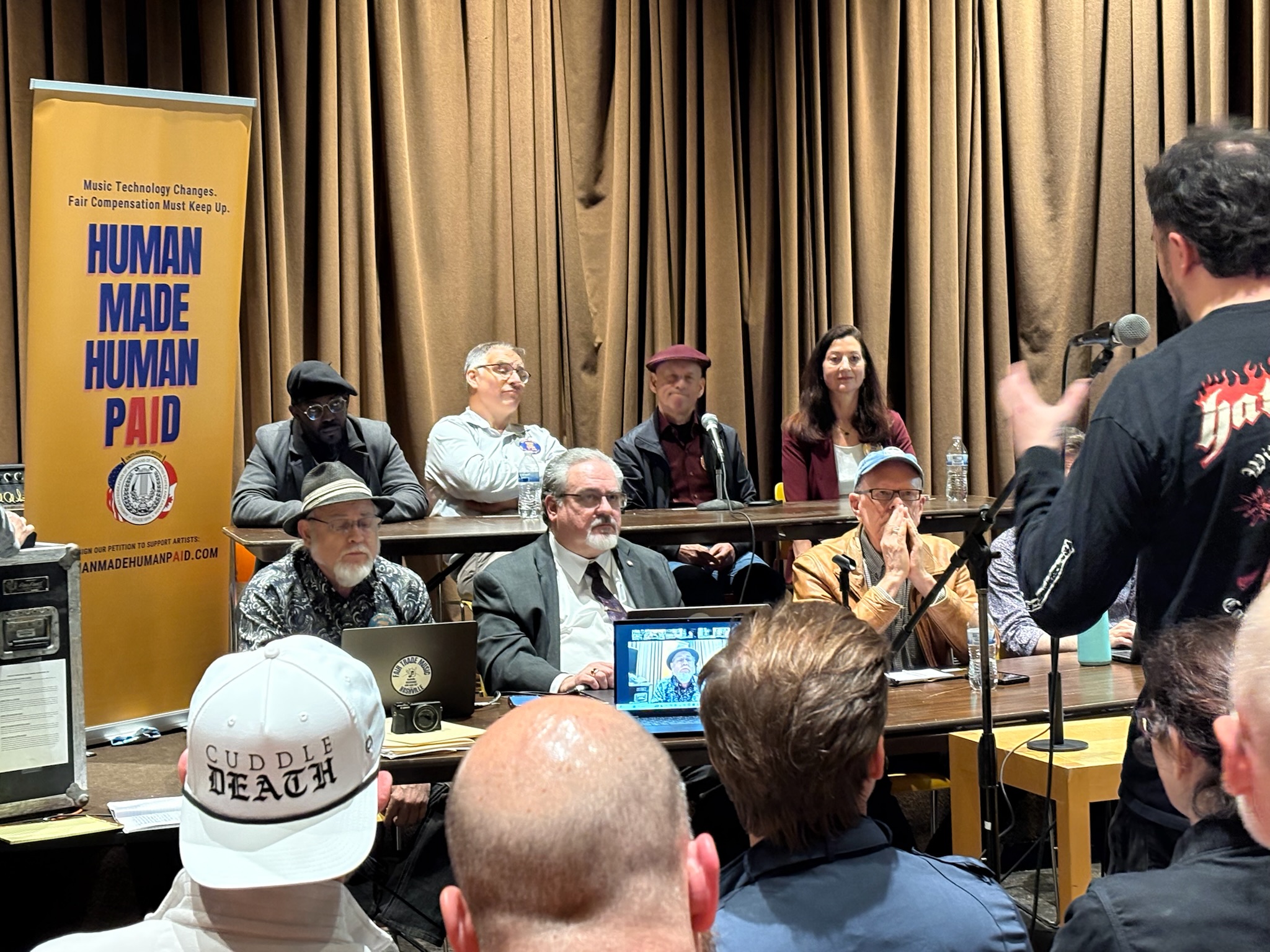
On October 29, the American Federation of Musicians of the United States and Canada (AFM) held a hybrid Town Hall meeting at the Nashville Musicians Association (Local 257) to update members on Sound Recording Labor Agreement (SRLA) negotiations ahead of talks resuming November 3–5. AFM International President Tino Gagliardi opened the meeting and outlined the current status of SRLA bargaining.

Heading into the fifth round of contract talks this year, the AFM bargaining team remains committed to securing the strongest possible agreement for musicians, music prep personnel, and artists. Contract demands also include strengthening healthcare funding and streamlining payment systems to keep benefits reliable and accessible. However, negotiations have stalled because the major record labels refuse to adopt protective guardrails for AI development and generative music:
“The record labels cannot claim copyright protection for master recordings while completely ignoring the human performers who recorded them,” said AFM International President Tino Gagliardi. “Our fight at the bargaining table centers on ensuring working musicians are not displaced by AI or exploited by labels. If labels profit from AI deals that use our work, the artists behind those recordings must receive fair payment.”
Healthcare coverage was a core topic of discussion, with a focus on securing Entertainment Industry Flex Plan contributions. AFM International Secretary-Treasurer Ken Shirk outlined the Flex Plan benefit structure, detailing the efforts during this negotiation cycle to mandate pre-tax healthcare contributions for all musicians working under the contract. Additionally, Local 47 (Los Angeles, CA) President Marc Sazer provided perspectives from Local 47 members enrolled in the Flex Plan, highlighting the value of these dependable, portable benefits.
The panel featured Local 257 President Dave Pomeroy, who welcomed everyone to the Nashville Hall and, along with AFM Electronic Media Services Division (EMSD) Director John Painting, discussed the importance of contract work.
AFM General Counsel Susan Davis detailed the federal lawsuit the AFM filed against Universal Music Group, Warner Records, and Atlantic Records. The suit calls out the labels for breaching existing collective bargaining agreements by licensing catalog tracks to AI developers without paying musicians their required new use fees. A clear double standard exists: record labels aggressively sue AI tech companies to protect their master copyrights, yet they attempt to deny the human performers who actually made those recordings a fair cut of the money.
To rally industry and public support, the Federation recently launched the “Human Made, Human Paid” campaign. Local 47 member and producer/arranger Will Wells spoke candidly about what is on the line for everyday working musicians. AFM Communications Director Antoinette Follett highlighted the power of member and ally voices in mobilizing global support. Organizing Services Director Gabe Kristal closed with an urgent call to action, stressing that building bargaining leverage takes total solidarity before the meeting transitioned into an open Q&A with in-person and online attendees.
As talks resume, the AFM’s message is clear: the future of music belongs to the musicians who make it—not record labels seeking to profit from our work. Take a stand against the unfair exploitation of musicians’ work by signing the petition at: www.HumanMadeHumanPaid.com.