Now is the right time to become an American Federation of Musicians member. From ragtime to rap, from the early phonograph to today's digital recordings, the AFM has been there for its members. And now there are more benefits available to AFM members than ever before, including a multi-million dollar pension fund, excellent contract protection, instrument and travelers insurance, work referral programs and access to licensed booking agents to keep you working.

As an AFM member, you are part of a membership of more than 80,000 musicians. Experience has proven that collective activity on behalf of individuals with similar interests is the most effective way to achieve a goal. The AFM can negotiate agreements and administer contracts, procure valuable benefits and achieve legislative goals. A single musician has no such power.

The AFM has a proud history of managing change rather than being victimized by it. We find strength in adversity, and when the going gets tough, we get creative - all on your behalf.

Like the industry, the AFM is also changing and evolving, and its policies and programs will move in new directions dictated by its members. As a member, you will determine these directions through your interest and involvement. Your membership card will be your key to participation in governing your union, keeping it responsive to your needs and enabling it to serve you better. To become a member now, visit www.afm.org/join.

FIND OUT MORE ABOUT THE AFM


Home » Member Profiles » Nashville Musicians Shine a Light on Fair Trade Music


Nashville Musicians Shine a Light on Fair Trade Music

  -  

For musicians who play the Lower Broadway club circuit in downtown Nashville, conversations about what it takes to make a living almost always come down to the same issues: low base pay, erratic tip jar policies, difficult load-in conditions, problems with third party booking agents, and venues that treat performers as an afterthought. Local 257 (Nashville, TN) responded with a novel idea: Ask the musicians about their concerns and which venues deserve their business, then analyze the results.

It’s no secret that Nashville has been inundated with tourists in the past few years, and most of them throng to Broadway, bar-hopping their way through the myriad of clubs—some old, and many new—that have proliferated in the area. In early 2026, the Nashville Musicians Association surveyed over 300 musicians who perform regularly on Lower Broadway, and asked them to weigh in on pay, working conditions, safety, booking practices, and other concerns. The musicians also ranked their favorite venues to play. Then Local 257 went public with the results, awarding Fair Trade Music Nashville stickers to the top-ranked venues for display at their entrances.

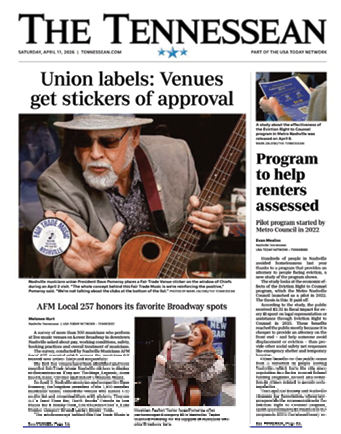
The resulting media coverage included stories from all local TV affiliates, plus a front page story in the city’s daily newspaper, The Tennessean. The successful media coverage of the stickers being placed on venue doors created the perfect launch for the bigger goals of the campaign—to create an improved environment for downtown musicians in the trenches. Clubs have been put on notice: Respect the people who are literally making your business profitable.

The survey told a clear story. More than 75% of respondents perform on Lower Broadway six or more times a month, and 95% have played downtown venues for two or more years. Nearly all—96%—said the tip jar is very to extremely important to making a living, while 77% identified low base pay as their primary challenge. Local 257 President Dave Pomeroy explains that base pay and tip jar policies vary considerably from venue to venue, with no consistent pay standards across the strip. More than half of respondents also cited parking and load-in conditions as a major concern.

“We have been working on behalf of Broadway musicians for more than a decade, starting with creating loading zone rights for musicians, trying to keep taxis and ride share drivers from blocking the zones, and getting parking discounts for members,” says Pomeroy. “The pandemic delayed our campaign for better pay and working conditions, but the Fair Trade Music survey has taken things to a new level. We encourage Nashvillians and visitors to patronize those clubs with the Fair Trade Music Nashville label. We will continue to spotlight more clubs all over Nashville that treat musicians with respect.”

Pomeroy visited the venues to present their stickers in person (full list of venues at nashvillemusicians.org). The stickers have resonated with patrons as well as musicians, signaling clearly which venues have earned the respect of the people who play there.

The AFM’s grassroots Fair Trade Music campaign works city by city, across the United States and Canada, to raise standards for freelance musicians through organizing, collective action, and education. Beyond the sticker program, Local 257 has worked to establish musician loading zones on Broadway and secure free parking for members in 25 Metropolis parking garages in downtown Nashville. Pomeroy says that community leaders from other cities, from Memphis, Tennessee, to St. John’s, Newfoundland, have taken notice and reached out to learn how to replicate the model in their own markets.

Participating venue owners have embraced the recognition. Robert’s Western World, The Stage on Broadway, and Legends Corner describe the stickers as a reflection of their longstanding commitment to the musicians who built Nashville’s reputation as Music City—a commitment they say predates the campaign and will outlast it. For Local 257, the initiative is less about naming bad actors than reinforcing positive behavior by club owners, and making sure audiences know the difference, and make their choices accordingly.


NEWS


https://totoabadi25.com/ abadicash abadislot Menara368 royalbola abadislot abadislot menara368 abadicash menara368 totoabadi Menara368