Now is the right time to become an American Federation of Musicians member. From ragtime to rap, from the early phonograph to today's digital recordings, the AFM has been there for its members. And now there are more benefits available to AFM members than ever before, including a multi-million dollar pension fund, excellent contract protection, instrument and travelers insurance, work referral programs and access to licensed booking agents to keep you working.
As an AFM member, you are part of a membership of more than 80,000 musicians. Experience has proven that collective activity on behalf of individuals with similar interests is the most effective way to achieve a goal. The AFM can negotiate agreements and administer contracts, procure valuable benefits and achieve legislative goals. A single musician has no such power.
The AFM has a proud history of managing change rather than being victimized by it. We find strength in adversity, and when the going gets tough, we get creative - all on your behalf.
Like the industry, the AFM is also changing and evolving, and its policies and programs will move in new directions dictated by its members. As a member, you will determine these directions through your interest and involvement. Your membership card will be your key to participation in governing your union, keeping it responsive to your needs and enabling it to serve you better. To become a member now, visit www.afm.org/join.
January 31, 2026
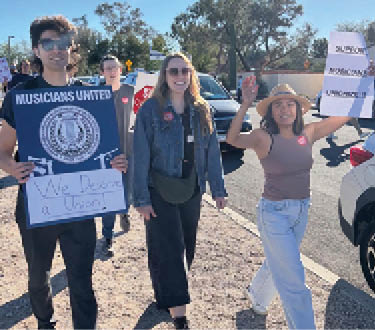
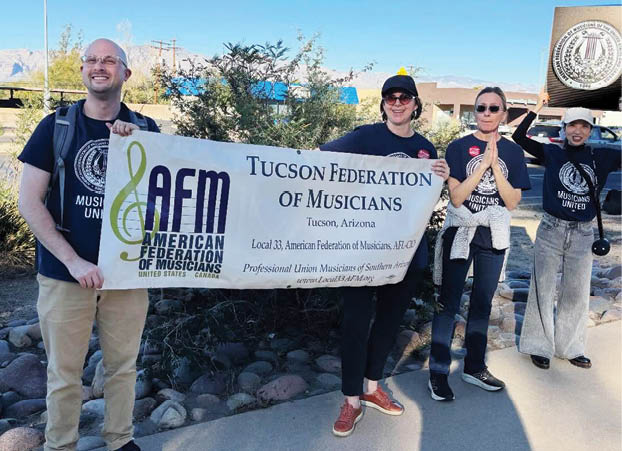
After 18 months of administrative stalling, the musicians of True Concord Orchestra (TCO) and members of Local 33 (Tucson, AZ) took their fight for professional dignity to the streets of Tucson in January. Despite unionizing under Local 33 in early 2024, the musicians are still waiting for management to recognize their status and begin the collective bargaining process. During the weekend demonstration, the air was filled, not with orchestral scores, but with chants of “Workers, united, we’ll never be defeated,” as members signaled their exhaustion with the ongoing delay.

For TCO performers, this movement is about bringing the organization up to industry standards. Ellen Ensey, a violinist with the group since 2004, highlighted the stark contrast between union and nonunion work. Drawing on her experience with the unionized Tucson Symphony Orchestra, Ensey noted that AFM contracts provide essential protections like guaranteed year-over-year work, transparent pay scales, and regulated breaks. Without a union, she argues, musicians are forced to accept contracts dictated entirely on management’s terms.
While Local 33 reports that more than 75% of TCO’s instrumentalists support the union, the board of directors has resisted, claiming in a letter to patrons that collective bargaining would upset the “delicate balance” between the orchestra and the singers. Local 33 President Alana Wiesing maintains that having a voice at the table is a collaborative necessity that ensures the future success of the organization. Although a government shutdown recently slowed the National Labor Relations Board’s review of their case, the musicians remain hopeful for a resolution. They continue to advocate for a fair agreement that replaces “take it or leave it” contracts with a truly collaborative professional environment.