Now is the right time to become an American Federation of Musicians member. From ragtime to rap, from the early phonograph to today's digital recordings, the AFM has been there for its members. And now there are more benefits available to AFM members than ever before, including a multi-million dollar pension fund, excellent contract protection, instrument and travelers insurance, work referral programs and access to licensed booking agents to keep you working.
As an AFM member, you are part of a membership of more than 80,000 musicians. Experience has proven that collective activity on behalf of individuals with similar interests is the most effective way to achieve a goal. The AFM can negotiate agreements and administer contracts, procure valuable benefits and achieve legislative goals. A single musician has no such power.
The AFM has a proud history of managing change rather than being victimized by it. We find strength in adversity, and when the going gets tough, we get creative - all on your behalf.
Like the industry, the AFM is also changing and evolving, and its policies and programs will move in new directions dictated by its members. As a member, you will determine these directions through your interest and involvement. Your membership card will be your key to participation in governing your union, keeping it responsive to your needs and enabling it to serve you better. To become a member now, visit www.afm.org/join.
April 1, 2026
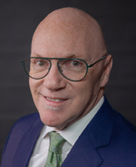
Allistair Elliott - AFM Vice President from CanadaThe National Summit on Artificial Intelligence and Culture took place this week in Banff, Alberta, March 15-17. The event was organized by the Government of Canada in collaboration with the Banff Centre for Arts and Creativity. I joined representatives from Screen Composers Guild of Canada; Canadian Independent Music Association; Alliance of Canadian Cinema, Television and Radio Artists (ACTRA); and many industry stakeholders from cultural, technological, and academic sectors, alongside government representatives, to advance discussions on the relationship between artificial intelligence (AI) and culture.
The Honourable Marc Miller, minister of Canadian identity and culture, and the Honourable Evan Solomon, minister of artificial intelligence and digital innovation, both presented perspectives. Minister Miller stated that he does not intend to “reopen the Copyright Act” and reaffirmed that creators must be remunerated for the use of their works.
The ministers announced the creation of an advisory committee on culture and AI. While the summit was an important step in bringing the cultural sector together with government and developers, we should remain concerned by the lack of firm commitments to date. I hope the creation of an advisory committee will provide a platform for inclusion of creators. We need consent for the use of copyright-protected works, credit when our works have been used, and compensation for using our work.
As I write this article, we have just wrapped up National Film Board (NFB) negotiations. I want to thank the negotiation committee of Local 149 (Toronto, ON) Executive and AFM International Executive Board Member Dusty Kelly, Local 406 (Montreal, PQ) Executive Director Guy Bernard, and Canadian Office Executive Director Liana White, who joined me at the table. The agreement is being edited and prepared for ratification which will likely happen in May.
There were gains in wages and pension. Real transparency from NFB provided us a platform for positive discussions culminating in updated payments for new use and re-use, as well as a side letter on any use of generative AI (GAI). GAI will be a conversation around negotiating tables for the foreseeable future. We will always work to protect the work done by human creators.
Due to timing, I was unable to share this news last month. I am saddened that Paul Leclair passed away on February 16, following a brief stay in hospital. He was first elected to the AFM Canadian Conference Executive Board in 2001, serving until 2003. His dedication to the AFM spans decades. In 2010, Paul was elected vice president of the AFM Canadian Conference, and in 2011 he became president of the AFM Canadian Conference, a role he served with distinction until his passing. His service to AFM Local 276 (Sault Ste. Marie, ON) began in the mid-1980s, and he remained a dedicated leader throughout the years. He was an active participant on the AFM Small Locals Committee. Paul’s unwavering commitment, steady leadership, and deep passion for musician advocacy will be profoundly missed.
par Allistair Elliott, vice-président de l’AFM pour le Canada
Le Sommet national sur l’intelligence artificielle et la culture s’est tenu à Banff, en Alberta, du 15 au 17 mars à l’initiative du gouvernement du Canada en collaboration avec le Centre des arts de Banff. J’y étais, aux côtés de représentants de Screen Composers Guild of Canada, de Éditeurs de musique au Canada, de la Alliance of Canadian Cinema, Television and Radio Artists (ACTRA), de nombreux intervenants des secteurs culturel, technologique et universitaire et de représentants gouvernementaux, pour discuter de la relation entre l’intelligence artificielle (IA) et la culture.
Monsieur Marc Miller, ministre de l’Identité et de la Culture canadiennes, et M. Evan Solomon, ministre de l’Intelligence artificielle et de l’Innovation numérique, ont tous deux exposé leur point de vue sur la question. Monsieur Miller a indiqué qu’il n’avait pas l’intention de « rouvrir la Loi sur le droit d’auteur » et a réitéré la nécessité de rémunérer les créateurs pour l’utilisation de leurs œuvres.
Les ministres ont annoncé la création d’un conseil consultatif sur l’IA et la culture. Bien que le Sommet ait marqué une étape importante en réunissant le milieu culturel, le gouvernement et les développeurs, l’absence d’engagements fermes à ce jour demeure préoccupant. J’espère que la création du conseil consultatif fournira une plateforme qui inclut les créateurs. L’utilisation d’œuvres protégées par le droit d’auteur nécessite un consentement, la mention de la source ainsi qu’une rémunération.
Au moment d’écrire ces lignes, les négociations avec l’Office national du film du Canada (ONF) viennent tout juste de se terminer. Je tiens à remercier le comité de négociation, soit Dusty Kelly, directrice générale de la Toronto Musicians’ Association (section locale 149, Toronto, Ontario) et membre du conseil exécutif international de l’AFM, Guy Bernard, directeur général de la Guilde des musiciens et musiciennes du Québec (section locale 406, Montréal, Québec) et Liana White, directrice générale du Bureau canadien, qui étaient à mes côtés à la table de négociation. La convention est en cours de révision en vue de sa ratification, qui devrait avoir lieu en mai.
Nous avons fait des gains au chapitre des salaires et du régime de retraite. Grâce à la grande transparence dont a fait preuve l’ONF, nous avons pu tenir des discussions constructives qui ont mené à une mise à jour des paiements relatifs aux nouvelles utilisations et aux réutilisations d’œuvres, ainsi qu’à la conclusion d’une lettre d’entente sur l’utilisation de l’IA générative (IAG). L’IAG fera l’objet de nombreuses discussions aux tables de négociation dans les prochaines années, et nous travaillerons sans relâche à protéger les œuvres des créateurs humains.
Le mois dernier, je n’ai pas eu l’occasion de vous faire part d’une triste nouvelle, celle du départ de Paul Leclair le 16 février à la suite d’une brève hospitalisation. Paul a été élu pour la première fois au conseil exécutif de la Conférence canadienne des musiciens de l’AFM en 2001 et y a siégé jusqu’en 2003. Actif au sein de l’AFM pendant des décennies, Paul a été élu vice-président de la Conférence canadienne en 2010 avant d’en devenir président en 2011, poste qu’il a occupé jusqu’à son décès. Il a commencé à s’investir au sein de la section locale 276 (Sault-Sainte-Marie, Ontario) de l’AFM au milieu des années 1980 et s’est démarqué par ses qualités de leader au fil des ans. Membre actif du comité des petites sections locales, Paul était un fervent défenseur des droits des musiciens. Son engagement inébranlable, son leadership rassurant et sa grande passion nous manqueront grandement.