Now is the right time to become an American Federation of Musicians member. From ragtime to rap, from the early phonograph to today's digital recordings, the AFM has been there for its members. And now there are more benefits available to AFM members than ever before, including a multi-million dollar pension fund, excellent contract protection, instrument and travelers insurance, work referral programs and access to licensed booking agents to keep you working.

As an AFM member, you are part of a membership of more than 80,000 musicians. Experience has proven that collective activity on behalf of individuals with similar interests is the most effective way to achieve a goal. The AFM can negotiate agreements and administer contracts, procure valuable benefits and achieve legislative goals. A single musician has no such power.

The AFM has a proud history of managing change rather than being victimized by it. We find strength in adversity, and when the going gets tough, we get creative - all on your behalf.

Like the industry, the AFM is also changing and evolving, and its policies and programs will move in new directions dictated by its members. As a member, you will determine these directions through your interest and involvement. Your membership card will be your key to participation in governing your union, keeping it responsive to your needs and enabling it to serve you better. To become a member now, visit www.afm.org/join.

FIND OUT MORE ABOUT THE AFM


Home » Member Profiles » Will Leathers: Trumpeter Hits High Notes On and Off Stage


Will Leathers: Trumpeter Hits High Notes On and Off Stage

  -  

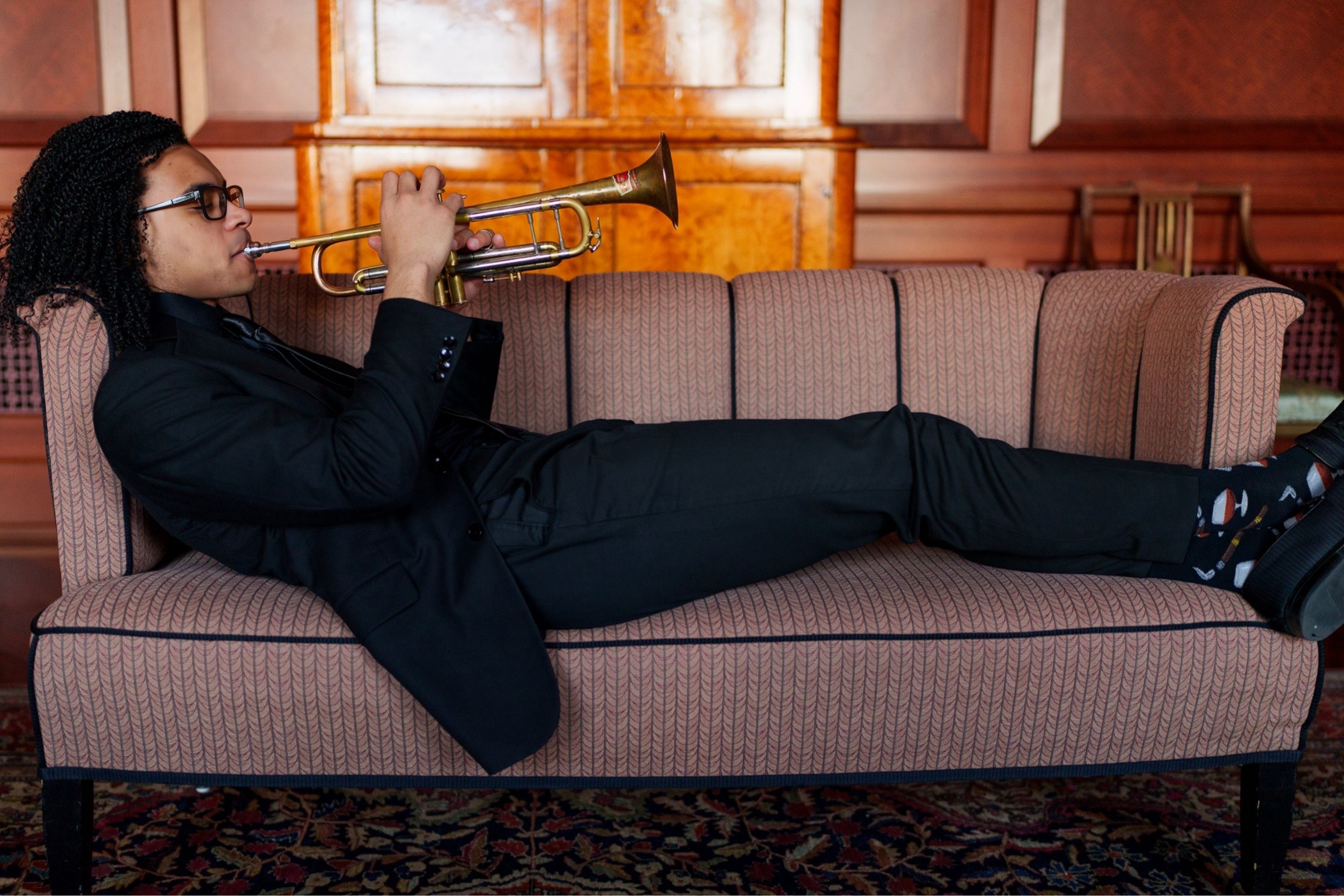
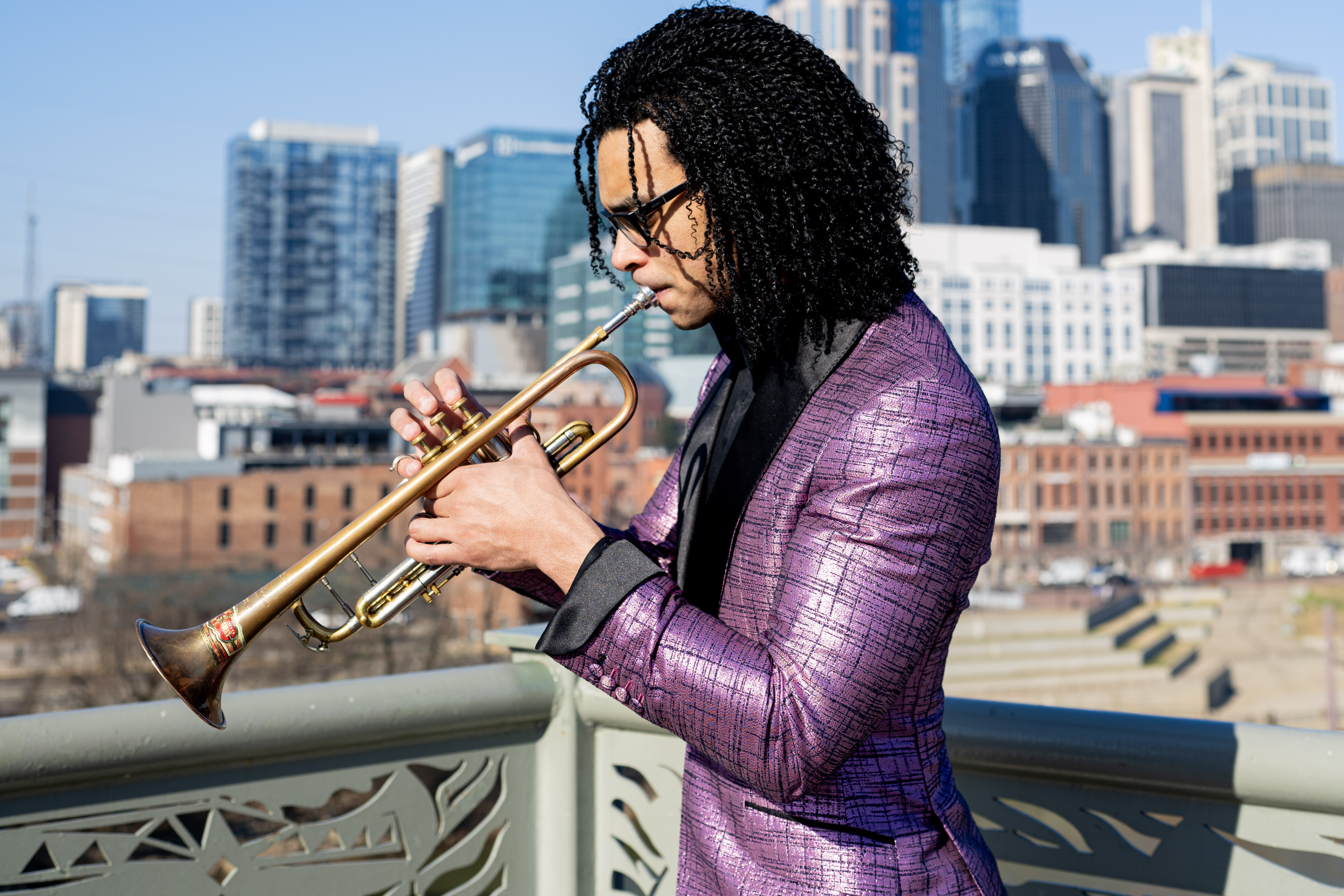
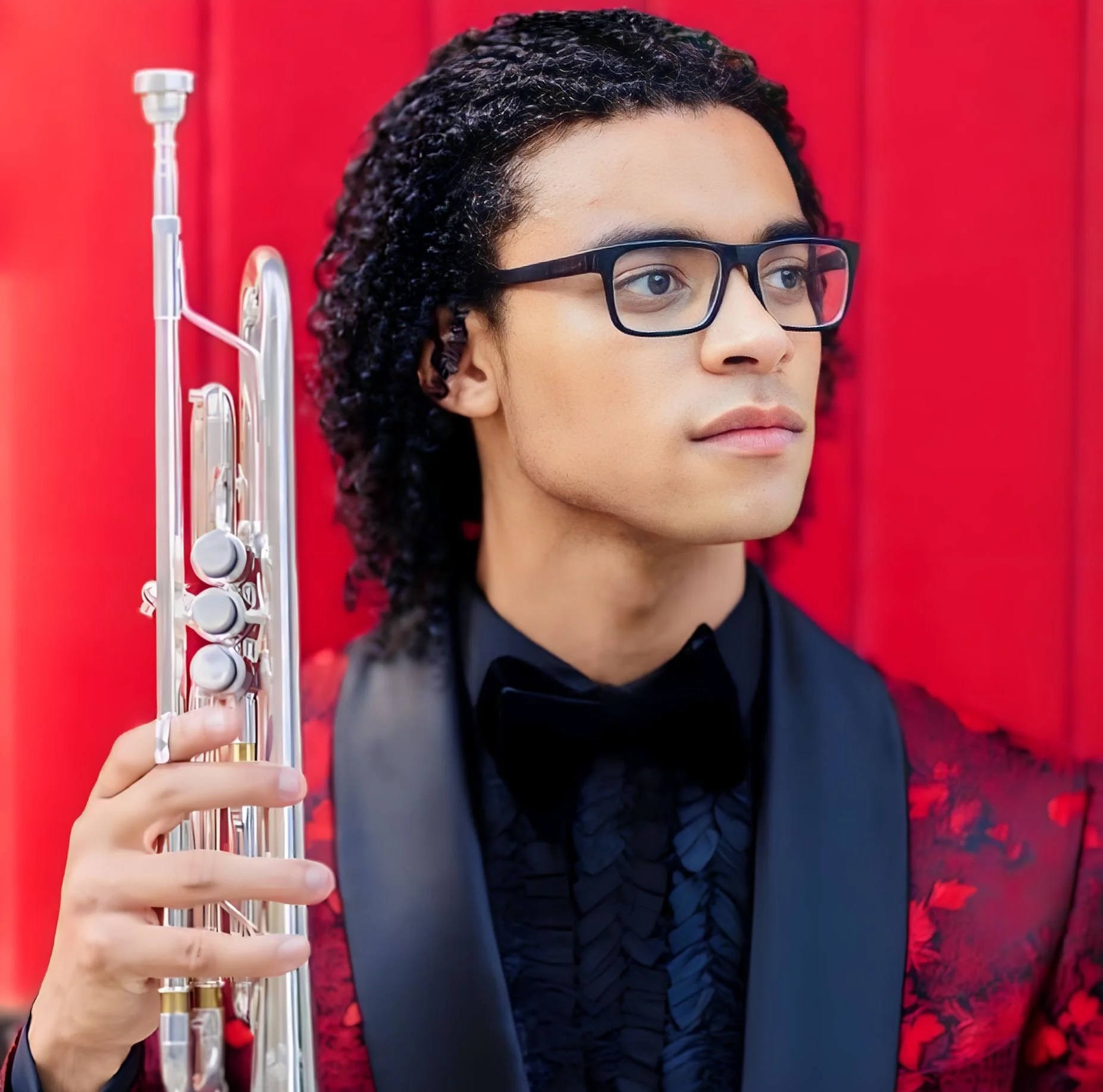
There’s an old saying that age is no substitute for experience. For trumpet player Will Leathers of Local 257 (Nashville, TN), a more appropriate saying might be that it’s not the years in your life but the life in your years that counts. A Mississauga, Ontario, native, Leathers is currently principal trumpet in both the Nashville Symphony Orchestra and the Santa Fe Opera Orchestra—and he won both jobs while still completing his studies in the five-year accelerated Bachelor of Music/Master of Music program at The Juilliard School in New York City. He was the first undergraduate classical trumpet player in the school’s history to receive the prestigious Kovner Fellowship.

As if that wasn’t enough, while performing in both orchestral positions, Leathers also maintains his chops as a concert-level pianist, having recently performed Mozart’s 23rd piano concerto with the Oakville Symphony near Toronto—on the second half of the program. He played the Tomasi trumpet concerto on the first half.

The drive to succeed in music came early to him, instilled and encouraged, he says, by both of his parents. His dad is a recently retired commercial jazz trumpeter. “I think my passion for music actually started much earlier than that, though, when I was still in the womb,” he laughs. “When my mom was pregnant with me, she would put the classical music station on the radio and place headphones on her belly.”

Early Keyboard Start

Music appreciation by osmosis quickly led to the desire to play, he says, at the tender age of 3 1/2. “There was a cartoon on TV called Oswald. The title character was this big blue octopus who played the piano. I was fascinated by him, and I begged my mom to let me play the piano so I could be like him,” recalls Leathers.

Leathers also credits his early keyboard obsession to a fascinating neurological condition in his brain called multisensory synesthesia. He explains that synesthesia is like having expanded senses of sorts, formed by extra neurons in the brain. “It plays out in phenomena like seeing colors in music, or in tasting different sounds,” he says. “Part of me wanting to play the piano was watching Oswald the octopus on TV and needing to recreate those same colors I saw when he played.”

Leathers’ mom relented after several months of hounding and found him a piano teacher. Once begun, Leathers’ piano progress was extraordinarily rapid. At age 4, bucking reluctance by music programs to accept such a young student, he enrolled in a music academy and won a piano festival competition a few short months later, besting students three times his age.

And all of this was before he even had a trumpet in his hands.

And On to the Trumpet

“I would have started earlier than 6 on the trumpet, if I could have,” says Leathers. “My dad wanted to wait until I had enough adult teeth to form a proper embouchure.” At 7, having received a trumpet for his birthday, practice came naturally to him, he says, aided by his dad’s experience. “He would teach me all different styles, from classical to jazz and gospel, and he established the way I set up the basics like embouchure and air support. I still do it the same way, and I still practice like crazy, just like he does.”

Asked if he can pinpoint a certain experience that led him to decide music would be his life, Leathers says it was pretty much always going to be that. “At whatever age I figured out I needed to do something, I knew it was always going to be music,” he says. “But I do recall the moment that I knew it would be orchestral music. I was 11, and my elementary school band teacher, also a trumpet player, took me to a dress rehearsal of Handel’s Messiah. I sat on the floor next to him in the orchestra, where I got the literal principal trumpet POV.”

The experience, he says, instantly made him fall in love with the art of collaborative music-making, and also leading a section. “I told my mom I wanted to audition, and I got into Toronto Youth Orchestra at 12,” he says. Leathers also won slots in two other area youth groups, becoming the youngest trumpet player to ever be accepted in all three groups.

The desire to eventually study in the US grew from knowing all the world-class teachers he would have access to. “When I actually visited Juilliard, I found so much to be inspired by,” he says. “The school offers so much more than just music and so much to be involved in.”

Making It Work

Leathers says his dad’s encouragement of his interest in learning many genres was a boon on the job. “I think it’s important for players to be versatile, and to learn how to change their sound easily and quickly,” he says. “Learning how to play jazz lead has become a useful skill for Nashville Symphony pops shows.”

Regardless of style, he tries to keep his fundamentals consistent, no matter what he’s playing, whether it’s a C trumpet for symphony orchestra work or a Bb with a shallow-cup mouthpiece for jazz. “I try to establish a concept for both types of sounds and then use the equipment to my advantage, picking what is best suited for each style, letting my technique follow my sound and trusting my body to naturally do what it needs to follow through.”

This same methodical approach is adopted for auditions. Leathers is a big proponent of the astute use of tech for audition prep and recommends it to younger players hitting the audition circuit. He believes it’s crucial for a player to convey to an audition committee that they really understand what is happening in the orchestra.

“Listening to great recordings is essential. I take that a step further, trimming the trumpet excerpts from these recordings, pasting them into a digital audio file, and adding them to an Apple Music library,” he said. “Say, for instance, an excerpt starts at measure 90. I’ll start a recording at measure 82 and have it fade in, so I know what comes before and after in the orchestra. I can then play along with these excerpts and get the sound of the orchestra in my ears.”

Mixing it up is also good practice: “I’ll hit shuffle so that, no matter what’s on the list, my brain is trained to match the sound of the orchestra in my head, regardless of the order.”

Leathers has one further piece of advice for aspiring auditionees. Listening to great players is great inspiration, he says. “But whatever you do to prepare, once you’re in the actual audition, don’t be anybody but yourself.”

Generating Interest in the Art

Obviously, not all young people have Leathers’ early appetite for music, and not everyone has Oswald the octopus. Leathers believes it’s important for that interest to be cultivated. “Children’s books about musical instruments are one example of a great way to get interest integrated at the most basic level.”

He cites famed fellow trumpeter Wynton Marsalis, who has written two books introducing young readers to the world of music. “Books can also be important sources of representation, for instance, showing a girl playing a trombone, or a Black kid playing classical violin. That can help get rid of stereotypes and show kids this is something they can do.”

Leathers also understands that his prominent role in the career field means it’s important for him to be an example of representation. “Being visible and playing my job in Nashville at a young age can provide inspiration to other young players,” he says. “When I go to majority Black schools, I’m often thanked for doing what I do at a high level because it gives their students hope and understanding that they can do it, too. And that makes me want to do it even more.”

Appearances at historically Black colleges and universities (HBCUs) have opened another outlet for Leathers’ self-expression: public speaking. “I talk to them about exploring the power of one’s mindset,” he says with obvious enthusiasm. “There’s a great book by Carol Dweck that delves into having a fixed versus a growth mindset, and these concepts transfer between fields.”

He adds that the benefits of public speaking work both ways: “The performance aspect of speaking in public makes me a better performer on stage, and preparing for talks makes me a better practitioner.”

In It Together

The takeaway from all of Leathers’ activity is that nothing happens in a vacuum. Life is a group effort, and the union is an example of that. He says he was a teenager when he joined AFM Local 149 (Toronto, ON), but came to appreciate the benefits of union protection while in Local 802 (New York City) and subbing on Broadway in the pit for The Music Man. It was a lesson that stuck.

“Now, of course, in Nashville, everything in town goes through Local 257. The most important reason we have a union is to ensure that we all get the equal rights and treatment we deserve for our hard work,” he says. “This is especially true in an orchestra. As many musicians as possible need to be in the union so that it remains relevant.” In a right to work state like Tennessee, this is something easily taken for granted.

When not in the orchestra or doing speaking engagements, Leathers keeps busy with other personal and outreach projects. He recently recorded his first solo album of music for trumpet and piano—on which he, of course, plays both parts. “The biggest challenge was deciding whether to record the trumpet or the piano part first, and it was fun to use all this recording magic to make every piece sound exactly the way I want.” He says doing it on his own was enjoyable. “As far as I’m concerned, I’m the most agreeable person I’ve ever worked with,” he laughs.

His Juilliard experience inspired him to give back to those wanting to enjoy those same opportunities. “I got some scholarships, but it wasn’t enough to cover the whole tuition,” he remembers. “A friend set up a GoFundMe. A lot of generous people in Canada donated to help me with my schooling, and that generosity made me want to help other Canadians wanting to go to school in the US.”

While Leathers is working on the logistics, he engages regularly in other charitable activities. “On my birthday last year, I asked for donations for care packages for homeless communities in Nashville. This year, also on my birthday, I did an R&B event to raise money for the Sexual Assault Center of Nashville.”

In all things, Leathers believes kindness is the foundation. “Spread kindness, and always stop and talk to people,” he urges. “Especially as a trumpet player with our reputation for ego­—if I can play the loudest double C and then be kind to the next person, that’s my way of being a good example.”


NEWS


https://totoabadi25.com/ abadicash abadislot Menara368 royalbola abadislot abadislot menara368 abadicash menara368 totoabadi Menara368