

Now is the right time to become an American Federation of Musicians member. From ragtime to rap, from the early phonograph to today's digital recordings, the AFM has been there for its members. And now there are more benefits available to AFM members than ever before, including a multi-million dollar pension fund, excellent contract protection, instrument and travelers insurance, work referral programs and access to licensed booking agents to keep you working.

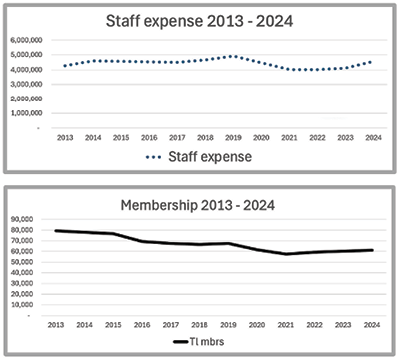
As an AFM member, you are part of a membership of more than 80,000 musicians. Experience has proven that collective activity on behalf of individuals with similar interests is the most effective way to achieve a goal. The AFM can negotiate agreements and administer contracts, procure valuable benefits and achieve legislative goals. A single musician has no such power.

The AFM has a proud history of managing change rather than being victimized by it. We find strength in adversity, and when the going gets tough, we get creative - all on your behalf.

Like the industry, the AFM is also changing and evolving, and its policies and programs will move in new directions dictated by its members. As a member, you will determine these directions through your interest and involvement. Your membership card will be your key to participation in governing your union, keeping it responsive to your needs and enabling it to serve you better. To become a member now, visit www.afm.org/join.

FIND OUT MORE ABOUT THE AFM

Secretary-Treasurer

jay blumenthal

Jay Blumenthal – AFM International Secretary-Treasurer

    Regulation vs Deregulation; Rules vs No Rules; Rights vs Laws

    My late father was born in 1906 into the atmosphere of the central Pennsylvania Mennonites. In his mid-70s, he once remarked to me about the incredible pace of technological change that he had witnessed within his lifetime­—ice blocks to refrigeration; outhouses to indoor plumbing; telegraph to telephone to radio wave broadcast; the horse and buggy to automobiles to air travel to space travel—the list goes on.

    I’ve often reflected on his perspective—the fast pace of change within one century compared to all the centuries that preceded­—and lately find myself considering whether my occupancy of the latter part of the previous century and the current one presents any parallels to my father’s experience. It does, although given my many years of involvement with the labor movement, my attention is more drawn toward the societal, political, and economic pace of change rather than the technological.

    As a baby boomer, I grew up in the midst of the civil rights movement, environmental activism, the war on poverty, and the emergence of consumer protection laws—all of which was a logical extension of the rewiring of society following the Great Depression of the 1930s. That same era was marked by the Vietnam war protests, the generation gap, the “war on drugs,” and duplicity in political leadership, all of which imbued in some of us of that generation a strong sense of both what is right and wrong for the people. We saw Richard Nixon forced from office for abuse of power and the subsequent election of Jimmy Carter as a harbinger of a better, more just society to come, all held together by a government truly of the people.

    That didn’t last. The movement that brought Ronald Reagan into office persuaded society that virtue was embodied by unbridled aggregation of wealth, that government was the problem and big business was our salvation, that rugged individualism and “pulling one’s self up by one’s bootstraps” was the sacred center of Western civilization. (Note to self: I must have been doing it wrong, because when I tried pulling myself up from my bootstraps I didn’t get any taller, but as I leaned down to do so someone did kick me from behind …)

    Regulation was the enemy, we were told, and we swallowed it hook, line, and sinker, which ingestion defines the fabric of our society still to this day.

    Organized labor took a parallel hit during this era of deregulation persuasion, as did our own industry, as did our union. When I entered this profession, all across the US and Canada our union regulated bandleaders and contractors, booking agents and management companies, clubs and venues, record labels and movie producers, and accordingly stabilized and enhanced what we all got paid. Such was the professional environment that a musician could actually plan the trajectory of their career. In parallel, so, too, could managers, agents, clubs, labels, and producers plan their trajectories.

    As the flood of deregulation washed across our land, however, the supports of our industry’s infrastructure got knocked out, one by one. A dependable, internally-regulated system of fair compensation for work fairly performed evaporated, and what remains is a patchwork of union-bargained contracts with individual employers, with the remainder infilled by those of us shoehorned into the gig-worker economy.

    Regulation is not a bad word. Regulation once meant that we could enjoy a crystal-clear telephone conversation; that news reportage was balanced; that common carriers (buses and airlines) served all our communities; that we could depend on clean air and water; that we’d know the ingredients of our food; that we’d know the country of manufacture of our consumer goods; that we could fly across the country without our knees jammed into our nostrils and land at an airport without fear of a collision.

    Organized labor and unions are all about regulation­—regulation not for the institutions, but for the people who are represented by the unions. Union regulation provides economic stability, economic parity, and fairness in the workplace. Union regulation removes our pay from the equation of competition between producers – if we’re all paid fairly, producers’ success depends on how well they do their business and not who gets away with paying their employees the least.

    Government is not the reliable backstop that it once was, however, so we musicians must undertake to redesign what we once had in order for what we do to remain a viable career choice. I look forward to taking the first steps for creating that new blueprint when all our union delegates come together at the AFM’s 103rd international convention in Ottawa next June.

    Read More

    We’ll Be Back After This Commercial Break ...

    If you experience most of life today through your phone or your computer as I do, you will inevitably come across hackers, scammers, phishers, ID thieves, ransomware demands, sneaky links, malicious sites, and the like. I am pretty careful about all of these web-dwelling hazards. For my personal accounts, I signed up for Malwarebytes’ free scanning and Protonmail’s free VPN. But the tricks and gimmicks are getting increasingly sophisticated, and more than once (but less than five times) I’ve found myself halfway into a trap before I wake up and recognize it for what it is and quickly back out. So, I recently decided to go for broke and purchased a two-year subscription to Malwarebytes’ more complete internet security package.

    With my new subscription allowing me the unfettered feeling of smugness and righteousness, I opened up my AFM email on a recent morning and discovered that Union Plus, affiliated with the AFL-CIO, is now offering US union members an ID protection program with more stuff than I subscribed to for less money than I paid, and which also comes with ID theft insurance ranging from $1 million to $5 million.

    I don’t like being a shill for commercial enterprises, but sometimes even shills serve a useful purpose. Union Plus has partnered with Aura to launch ID Protection Plus, providing union members comprehensive ID protection at discounted members-only rates. By integrating identity protection, financial monitoring, and family safety into one consolidated interface, the program ensures union members’ tech and assets remain secure. Aura is provided through Securus Identity Solutions, LLC, located in Minnesota, and is rated the Best Identity Protection Service by US News & World Report.

    Union members must enroll through the dedicated page to receive the discounted rates. Program information is available at UnionPlus.org/idprotection, featuring a dedicated page outlining the ID Protection Plus Program and its benefits.

    As long as I’m engaged in shilling, I’d like to remind the US members that significant cellular discounts are available from AT&T for union members through the Union Plus AT&T Signature Program. The program offers savings of $10 per line, per month on the AT&T Unlimited Premium PL plan, up to $50 savings on activation and upgrade fees, 15% off qualified wireless plans, and 20% discount on eligible accessories. Visit unionplus.org/att.

    And not wanting to be solely US-centric, Canadian members can find deep discounts for cellular service from Rogers, Telus, and Bell by navigating to unionsavings.ca/en/categories/mobile-phone-plans.

    _________

    The 103rd International Convention of the American Federation of Musicians of the US and Canada is just around the corner, to be held in Ottawa, Ontario, starting on June 20.

    Unlike many other international unions, the AFM’s convention is truly a working convention. The local union delegates to the convention attend for four full days in the spirit of service to the membership. It is this triennial gathering that sets the stage for our union over the following three years, and the delegates approach it with the same sense of purpose as any musician does with practicing—something to be focused on seriously if there’s to be any improvement.

    You will find in this and previous issues of International Musician detailed information for delegates pertaining to Ottawa hotels and rates, funding, candidacies, and the ever-popular section on how to properly submit a resolution for consideration by the convention.

    What you will not see in the notice, however, is that any AFM member is welcome to attend the convention, at their own expense, as a guest observer. Guests are welcome to attend the regular sessions as well as the special events and preconvention gala on the eve of the convention, June 19, and, most importantly, guests also qualify for the swag bag.

    If you are not a delegate but wish to experience a convention in the capital city of Canada during a particularly nice time of the year, contact your local and ask to be added to the local’s convention guest list. Hotel reservation information is in the convention notice on page 21, as well as online at AFM.org/convention.

    Read More

    Indies Redux

    It should be no surprise to anyone when I say that, outside the realm of traditional collective bargaining, the 20th century structure of our Federation does not match the 21st century ever-changing business of music and the needs of the musicians who must evolve with it. Technology, product distribution and consumption, AI, copyright, legal niceties or lack thereof, and a society that has been stood on its head have all conspired in a manner to place great economic pressure on musicians just to survive as such, not to mention the stresses placed upon the creative processes that are so much a major part of who we are. That’s why I find nothing more gratifying than to see a whole cadre of musicians that have identified a common need and who organize to demand satisfaction.

    In my column last month, I made note of a few of the organizations that have formed just for that purpose­—UMAW, Music Workers Alliance, and the Indie Musicians Caucus of the AFM. I wrote about the obstacles that US labor law places in the way of musicians who need to organize outside of the traditional collective bargaining realm, and the potential legal sink holes that may confront any group of independents building for collective action outside the legal shield of a union. My purpose in that column was solely to bring into the light of day a quick exposition of unfairness of US labor law for American musicians and to state unequivocally that, notwithstanding legalities, what these groups seek is what we all want.

    It was with a certain amount of bemusement, therefore, to receive a letter for “Feedback” from a passionate member who managed to glean meanings from my writing that were neither intended nor implied.

    The main thrust of the member’s letter was focused on the AFM’s current bargaining with the record labels and the overarching imperative to lock down the “three C’s,” i.e., consent, credit, and compensation for musicians as that relates to the use of artificial intelligence in sound recording production, along with finding a way to realize meaningful health care benefits from the industry for musicians who don’t otherwise qualify for employee benefits. A quick read of AFM President Gagliardi’s column in this issue ought to provide some reassurance to the member of the bargaining team’s commitment to these goals.

    What particularly caught my attention, though, was the member’s questioning of this union’s commitment to the needs and demands of indie and freelance musicians, both within the recording arena and beyond. Evading a core mission was certainly not the point of my writing, and—at least from my viewpoint—it would require the equivalent of an accomplished yoga practitioner to wrangle interpretation from what I wrote last month.

    I acknowledge, however, that perception belongs to the reader, not the writer, and I therefore wish to state the following in as unambiguous a manner as possible.

    The AFM International Executive Board has allocated an unprecedented near 10% of the 2026 budget in new expenditures toward building member strength, with the intention going forward to amplify that even more. The Organizing Department is expanding as I write this, specifically with the aim of directly partnering with local unions, both locally and regionally, to strengthen existing conditions and build solid local musician communities to manifest their goals. Strength and solidarity at the local level translates to strength at the international level.

    The board has affirmatively determined that this union must devote its resources to organizing to build power to enable members to attain fairness in the labor market and justice in the political realm by building membership in touring, freelance, recording, and local gig markets and developing power to achieve strong contracts—whatever that means and whatever it takes—in the US and Canada—with or without helpful labor laws.

    Read More

    Indies vs. Labor Law

    I like Canada. Like any nation, it has its flaws here and there, but I like it for its geological beauty, because national health care is part of public policy, because its elections are actually representative of the will of the citizenry, because its maple leaf flag reminds one of a connection to the natural world, and because it contains some of my favorite cities in the world.

    I especially like Canada because any Canadian musician—employee, independent contractor, dependent contractor, and probably busker—can secure some level of labor union representation and protection in their work. This representation and protection is unavailable to a vast swath of their American counterpart musicians south of the border, thanks to American federal labor law.

    Undergirding all American labor laws— and undergirding the US Constitution, in fact—is the idea that Commerce in all its Glory must not be disrupted. It takes no keen observer to see that the scales of American Blind Justice are weighted in favor of commerce and, by obvious extension, in favor of business. That the US has any labor laws at all is not from a sense of social justice, but because historically unions had been very effective in disrupting commerce in pursuit of worker gains, and business needed something to slow down, if not reverse, that union progress. So Americans now have the National Labor Relations Act (NLRA), among others, purportedly protecting workers’ rights, but in fact, operating to suppress workers’ rights.

    And what has this to do with American musicians? American labor law is designed specifically to operate on the Employer-Employee relationship, i.e., employees of an employer have the right to form a union to bargain with their employer. But an indie musician in the US likely has no legally-defined employer. A freelance musician, jumping from gig to gig, likely also has no employer within the definition of law. Transactions between those musicians and those who pay for their services fall into the bucket of commerce, not the protections of labor law. Labor law and the legal right to bargain collectively is out of their reach. The harm that this unfairness has brought upon the music profession is both insidious and profound.

    Several independent musician organizations have sprung up over the years in reaction to the manifesting inequities. United Musicians and Allied Workers are working to secure mandated compensation for music streaming and fair pay at music festivals. The Music Workers Alliance seeks to regulate the use of AI by independent record labels and protect musicians’ intellectual property. The Indie Musicians’ Caucus of the AFM is pushing for the Federation to broaden and step up its representation of indie artists in all their market areas.

    What these independent groups seek is very much in alignment with our union’s goals. The irony is that the very nature of their “employment” (for lack of a more defining term) prevents them from accessing the few rights otherwise available under the NLRA, and without a union umbrella to operate under, they must tread a narrow path to avoid antitrust allegations from industry. The quest for equity and fairness is frustrating and crazy.

    Canadian musicians just don’t have to think about these things with the same intensity.

    Consumer advocate Ralph Nader, as a candidate for US President in 2000, proposed repealing the Taft-Hartley Act (the act that made the NLRA untenable for workers). That would be a start. But for decades, the entertainment unions have struggled to push their square peg through the round hole of the NLRA. For many of those decades, the AFM attempted to persuade Congress to amend the NLRA to make union representation easier for entertainment workers, but without success. Several states have adopted legislation intended to address the performer’s employment environment, but ended up replacing old problems with new ones.

    Perhaps it’s time for Congress to recognize that all of us performers in the entertainment trades are not like other workers and that we should have our own Performers’ Labor Rights Act.

    Read More

    Winning and Success—Two Different Concepts

    In New York City, Democratic Socialist Zohran Mamdani was elected mayor, with over 50% of the three-way vote, following one of the highest NYC voter turnouts in recent memory. His election has been hailed as a victory for the left-leaning populous, an indication of the emerging power of young adults and ethnic minorities, and portending momentous positive change for life in the Big Apple.

    Maybe. Winning a vote or an election is only the beginning of a long-haul struggle.

    The people who voted Mamdani into office in anticipation of his promises of free public buses, affordable housing, city-owned grocery stores, a rent freeze, and raising the minimum wage to be paid for with increased taxation on the wealthy, must understand that his election alone will not automatically manifest those promises. Electing Mamdani is only the start. Mamdani cannot do it himself—there are many, many political, bureaucratic, and private agencies and stakeholders connected and affected by those promises that will resist a disruption of the status quo. The same popular movement—the people—that brought Mamdani to office must stay engaged and activated if they want any of their dreams to become a reality.

    If they think voting on November 4 was enough and then go back to life-as-usual, nothing will change. One only has to look at Barack Obama’s presidency to see the disconnect between the euphoria following his election and the moribund societal and governmental status quo that followed for the next eight years. Change takes a steady and relentless push from a lot of people

    The work of the people of New York City, therefore, has only just started, and the next several months will reveal if the people are up to the task.

    Following his election as US President in 1932, organized labor approached Franklin Roosevelt and demanded significant labor law reform. Roosevelt recognized the need for reform, but told the labor leaders, “You must force us to do this, because unless you do, Congress will not act.” Taking up the challenge, workers delivered up two years of nationwide demonstrations, strikes, and work stoppages, ending with Congress adopting the 1935 Wagner Act, which guaranteed the right of workers to collectively bargain with their employers.

    The same principle applies in our little piece of the universe. The members of a bargaining unit, like an orchestra or theater group, who fill out a contract survey and then totally leave it up to their five-person negotiating committee to wield some sort of magic at the negotiating table cannot expect the most desirable outcome. Their committee needs the active and engaged participation of all the musicians if the employer or management is to be persuaded to agree to their contract demands. I have personally witnessed the amazing results that are achieved by musicians who step out of their comfort zone and together stake out their position on the front lines—and who then discover themselves living in a new, expanded comfort zone: collective strength. Settling a contract negotiation is not the end of a process; it’s the beginning of the next contract campaign. Building strength, whether it’s physical strength, political strength, or labor strength, requires clear goals, planning, and steady incremental action—just like our work. Steady, smart practicing means we’re always ready for the next gig. Steady, smart preparation means we’re always ready for the next contract campaign

    Read More


NEWS


https://totoabadi25.com/ abadicash abadislot Menara368 royalbola abadislot abadislot menara368 abadicash menara368 totoabadi Menara368